From Bedroom to Big Stage: How Esports Became Gaming’s Pro League
Esports isn’t “just kids playing games” anymore—it’s sold-out arenas, million‑dollar prize pools, and players grinding harder than most traditional athletes. If you’ve ever watched a finals stream and thought “That could be me” or “How did this even get so big?”, this is your deep dive. Let’s break down how esports blew up, what’s really happening behind the scenes, and how you can level up from casual queue warrior to legit competitor.
How Esports Went From LAN Party to Global Stadium Sport
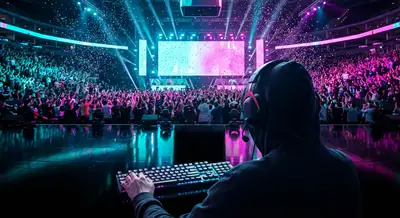
Esports used to be a niche subculture—local LAN tournaments, scuffed prizes, and prize pools that barely covered travel. Now we’ve got events in massive arenas, brands like Mercedes-Benz and Red Bull sponsoring tournaments, and college scholarships for playing League of Legends or Overwatch.
A few key things powered that shift:
Streaming changed everything
Twitch, YouTube, and regional platforms put tournaments in front of millions. You didn’t need TV deals; you just needed good gameplay and hype casters. Viewers tuned in for both skill and personality, turning pros into influencers.A few games built competitive empires
Riot locked in League of Legends with structured leagues, seasonal splits, and Worlds. Valve’s The International turned Dota 2 into a prize pool monster. Counter‑Strike kept its legacy as the OG FPS esport with consistent high‑level competition. Then came Overwatch, Valorant, Rocket League, and more to widen the ecosystem.Brands realized gamers aren’t “just kids”
Sponsors saw the numbers: esports pulls in younger audiences that don’t watch traditional TV. That means jersey sponsors, arena banners, and branded content funding bigger production and bigger player salaries.Universities and governments got involved
Colleges launched varsity esports programs and scholarships. Some countries now recognize pro gamers as athletes for visas and international events. That legitimizes esports far beyond “gaming in the basement.”Production values went full sports-broadcast mode
Replays, analysis desks, player cams, AR stage effects—you’re not just watching a game, you’re watching a show. That helps non‑gamers understand what’s going on and makes it easier to share highlights on social media.
The bottom line: esports isn’t replacing traditional sports—it’s becoming its own lane, with its own culture, heroes, and meta.
What Actually Makes a Game an Esport?
Not every popular game turns into a good esport. Some titles are god‑tier to play casually but terrible to watch competitively. For a game to really pop off in esports, a few boxes have to be checked:
Skill expression must be obvious
Viewers need to see the difference between a casual and a pro. Think aim in CS2, mechanics and map movement in League, micro and macro in Dota 2, or positioning and utility in Valorant. If everyone looks the same on stream, it’s boring.The game needs spectator clarity
A good spectator mode, readable UI, clear team colors, and understandable objectives matter. If a new viewer can’t tell who’s winning within 30 seconds, the game has a high barrier to entry as a spectator esport.Balanced, but not bland
Perfect balance is impossible, but the meta can’t be dominated by one broken strat or hero for months. Good devs tweak frequently enough that the game feels fresh, but not so often that pros can’t stabilize their strategies.Competitive infrastructure
Ranked is not enough. There need to be ladders, tournaments, regional leagues, dev support, anti‑cheat, and prize pools. Publishers that treat esports as a core pillar (Riot, Valve, Psyonix) see long‑term results.Content-friendly moments
Clutch plays, insane combos, wild ultimates—these generate clips, memes, and highlights that spread on TikTok, Twitter, and YouTube Shorts. That social loop is how games stay relevant outside their own player base.
If you’re picking a game to grind competitively, don’t just ask “What’s popular?” Ask: “Is this game built to survive as an esport for years?”
Grinding Ranked vs. Playing Pro: What Viewers Don’t See
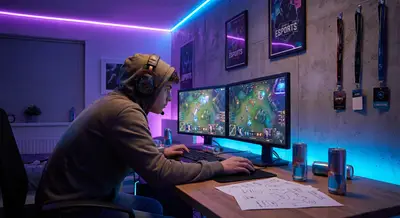
From the outside, pro players look like they’re just playing games all day. On the inside, it’s closer to a full‑time job plus homework.
Here’s what separates competitive grinders from casual ranked enjoyers:
Structured practice, not just mindless spam
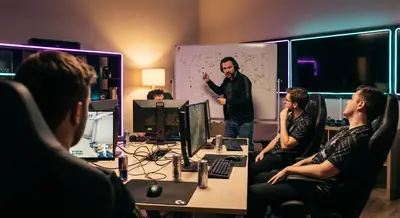
Pros and high‑level teams don’t just queue for 12 hours straight. They scrim specific teams, run set plays, practice timings, drill setups, and then review replays to see what broke down. Quantity without intention is just noise.Team systems over solo heroics
Your ranked god instincts can actually hurt you in a real team system. Pros follow set protocols: when to fight, who makes the call, what utility/abilities are used when. Random hero plays might work in ranked, but in scrims they get punished instantly.Mental game and discipline
Tilt isn’t just annoying—it’s a competitive liability. Pros have to handle pressure, time zones, hate comments, bad metas, and constant roster rumors. The ones who last years instead of months aren’t just mechanically strong, they’re mentally stacked.Patches can threaten your career
Imagine your best agent/hero/champ gets gutted in a patch the week before qualifiers. That happens. Pros need deep pools and the ability to adapt fast. If your entire identity is “one‑trick god,” you’re fragile in a meta that shifts every patch.Content creation is part of the job now
For many orgs and players, you’re not just paid to win—you’re paid to be visible. Streaming, socials, vlogs, and collabs matter. The most secure pros are the ones who build their own audience instead of relying only on salary.
If you plan to chase the pro dream, treat it like a demanding career, not a shortcut to “playing for money.”
Insider Tips: Leveling Up from Ranked Warrior to Esports Competitor
If you’re serious about stepping into the competitive scene, here’s a no-nonsense roadmap that players actually use:
1. Specialize, but don’t hard‑lock yourself
Pick a primary role and a small pool of heroes/agents/champions. Master them deeply. Then:
- Keep 1–2 off‑picks for meta shifts and bans.
- Watch pro replays of your role and copy their decision‑making, not just their builds.
You want to be “the guy” on a specific role, not “kinda decent at everything.”
2. Play in real tournaments ASAP
Don’t wait till you “feel ready.” Start small:
- Community tournaments (Battlefy, FACEIT, Smash.gg/Start.gg, ESL, local LANs)
- University or school leagues
- Discord server leagues and in-house scrims
Tournament nerves are completely different from ranked nerves. The sooner you expose yourself to them, the stronger your mental will be.
3. Build your VOD review habit
Record your games and ask cruel questions:
- What decision lost us this fight/round, and why?
- Where was my camera/aim/position compared to a pro in the same situation?
- Was my death forced, or did I greed for no reason?
- Did I follow team calls, or ego‑play for clips?
Review 1–2 key games per day instead of spamming more matches on autopilot.
4. Network like it’s part of the game (because it is)
Teams don’t magically discover you. You need to be visible:
- Join Discords for your game’s competitive scene
- Be the player people want to scrim with (chill, communicative, reliable)
- Post your plays, clips, and tourney results on Twitter/X, TikTok, and YouTube
- Don’t flame publicly: orgs and IGLs lurk more than you think
Your reputation is your MMR in the scene.
5. Treat your body like part of your setup
Reaction time, consistency, and focus are all physical:
- Sleep like you’re queuing for money (because you might be)
- Get some basic exercise—walking, lifting, something to fix “gamer posture”
- Take eye breaks and stretch wrists/shoulders
- Keep caffeine under control; cracked out ≠ locked in
You can’t frag if your hands and brain are cooked.
Honest Reality Check: The Pros and Cons of the Esports Grind
Esports looks glamorous from the outside, but if you’re aiming for the top, you need the full picture.
Upsides:
- You get to compete at the absolute highest level in the game you love.
- Travel, events, LAN vibes, and memories you can’t replicate anywhere else.
- Salary + prize money + sponsorships + streaming potential.
- Community recognition and a platform to build a long‑term brand.
Downsides:
- Career length can be short—burnout, meta changes, younger talent, team cuts.
- Pay varies wildly; tier‑2 and tier‑3 scenes can be unstable and underfunded.
- Scrim schedules can wreck your sleep and social life.
- Public pressure and criticism are constant, especially during slumps.
The smartest players think beyond “just win this year.” They:
- Build a stream or content presence.
- Network with coaches, casters, analysts, and org staff.
- Consider future roles: coaching, analysis, talent, team management, or dev relations.
Going pro doesn’t have to be your only goal. You can be part of esports as a coach, analyst, observer, TO (tournament organizer), broadcast talent, social media lead, editor, or designer. The industry is bigger than the players on stage.
How to Stay Hooked Into the Esports Scene (Without Getting Overwhelmed)
The esports ecosystem is massive—multiple games, multiple regions, multiple leagues. You don’t need to watch everything to stay plugged in.
Here’s a simple way to stay locked:
- Pick 1–2 main titles you actually enjoy watching.
- Follow the official leagues and events on Twitch/YouTube and Twitter/X.
- Sub to 2–3 top pros or analysts for your role/game; pay attention to how they explain things.
- Use socials as your patch notes filter—follow devs, analysts, and major orgs.
- Clip and share your favorite plays from broadcasts and your own games; that’s how you join the conversation.
You don’t have to be on stage to be part of esports—just showing up in chat, sharing hype moments, and supporting the scene helps it grow.
Conclusion
Esports is gaming turned competitive, professional, and global—but at its core, it’s still what pulled us into games in the first place: clutch moments, impossible comebacks, and squads trying to outplay each other under pressure.
If you’re grinding ranked and wondering “What’s next?”, the path is there:
- Pick your game and role intentionally.
- Play real tournaments, not just ladder.
- Review, adapt, and treat your grind like a craft.
- Build your network and your presence, not just your K/D.
Whether you end up on stage, on the analyst desk, behind the camera, or just in Twitch chat spamming hype, you’re part of the ecosystem now. And esports is still early. The next generation of legends, coaches, casters, and creators is literally queueing up right now.
So finish this article—and then go play like someone’s watching your VOD.
Sources
- ESPN – What is esports? A look at an explosive billion-dollar industry – Overview of the growth, structure, and economics of the esports scene
- Nielsen – Insights into the esports audience and sponsorship value – Data on viewership, demographics, and brand involvement in esports
- NCAA – Esports and higher education – Survey results showing how colleges and universities are integrating esports
- Riot Games – League of Legends Esports Ecosystem – Example of an official publisher-supported global league structure
- International Journal of Gaming and Computer-Mediated Simulations – Cognitive and physical demands in esports – Research on performance, training, and physical/mental demands on pro players