Game Reviews Reloaded: How to Spot the Real Winners (And Trash the Cash Grabs)
Game reviews are your first line of defense against wasting $70 on a mid game that looked fire in the trailer but plays like a mobile ad. In a world of hype cycles, influencer deals, and day-one patches bigger than the game itself, knowing how to read reviews (and write your own) is basically a gamer survival skill.
This isn’t just “this game is good/bad” talk. We’re breaking down how to analyze reviews like a pro, what red flags to watch for, and how to decide if a game fits your playstyle—not just the metascore.
What Makes a Game Review Actually Useful?
A good game review does more than scream “10/10 GOTY” or “this game is trash.” It should answer one big question: Is this game worth my time and money? That means going beyond graphics and “vibes” and digging into how the game actually feels to play.
Useful reviews break the game down into key components: performance, gameplay loop, progression, story, and long-term replay value. They call out bugs, balance issues, and pay-to-win systems instead of pretending they don’t exist. They also compare the game to similar titles so you know what you’re getting into—like telling you, “If you loved Monster Hunter, this will click, but if you hate grind-heavy progression, skip it.”
Most importantly, a solid review makes its biases clear. If a reviewer loves hardcore soulslikes, you can understand why they might rate a cozy farming sim lower—and adjust your expectations. The more transparent the review is about playtime, platform, and what content was actually tested, the more you can trust it.
Single-Player vs. Live Service: Different Rules, Different Red Flags
Not all reviews are created equal, especially when comparing one-and-done single-player campaigns to constantly evolving live-service monsters.
For single-player games, day-one reviews can be pretty accurate. Story pacing, combat feel, and level design won’t magically change overnight. But performance can: patches may fix bugs or improve frame rates, so always check updated impressions a week or two after launch. If reviewers mention that performance is rough across multiple platforms, that’s a major warning sign for early buyers.
For live-service and multiplayer games, day-one reviews are more like early impressions than final verdicts. Server stability, matchmaking, meta balance, and content cadence (how often new stuff drops) are way more important here. A game might launch with fun combat, but if progression is stingy or the monetization is predatory, it’ll show up fast in long-term player feedback, not just launch reviews.
If a review of a live-service game completely ignores the in-game shop, battle pass systems, or grind requirements, treat that as a red flag. These systems are often where the real “cost” of the game lives—even in free-to-play titles.
How to Read Between the Lines of Hype and Scores
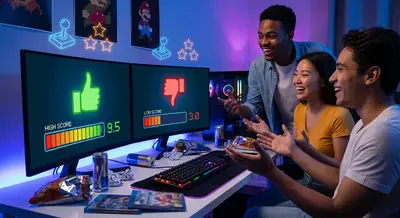
Scores are flashy, but they can be misleading if you don’t look underneath them. A 7/10 from one outlet might be “pretty good,” while from another it basically means “meh.” Instead of fixating on the number, dig into why they awarded it.
Look for patterns: if multiple outlets mention “repetitive side quests,” “bullet sponge enemies,” or “shallow skill trees,” those issues are probably real. On the flip side, if you see phrases like “it gets good after 15 hours,” think hard about whether you actually want to invest that much time before the fun starts. The review score might be generous, but your free time isn’t.
Also, pay attention to disclaimers: Did the reviewer play on PC or console? Offline or with full servers? Did they finish the main campaign, or only the first 10 hours? When reviews don’t clearly state playtime or progress, it’s harder to judge how well-tested those opinions are.
Pro tip: read both one positive review and one critical review of the same game. The truth is usually somewhere between “masterpiece” and “hot garbage.” Your job is to figure out which deal-breakers matter to you personally.
Insider Tips: Decoding Monetization, DLC, and “Value”
Publishers are getting smarter—and trickier—about how they package content. Your job is to see through the marketing and answer: What am I actually getting for my money?
First, check if reviews mention aggressive monetization: XP boosters, loot boxes, FOMO-driven cosmetics, or battle passes that require grind-level dedication. If reviewers keep nodding to “optional purchases that speed up progression,” that often translates to “the game is tuned to be grindy unless you pay.”
Next, look for reviews that talk about DLC and expansions. Is the base game complete, or does it feel like a skeleton waiting for paid add-ons? Some games launch feeling like “Part 1” of a full experience. That doesn’t make them bad, but it does affect value. A short but complete, polished game can be a better buy than a 200-hour grindfest padded with filler content.
Finally, think about how you play. If you’re a “finish the campaign and move on” gamer, a tight 15-hour banger might be perfect. If you want one game to be your “forever game,” you’ll care more about endgame systems, community support, events, and roadmap transparency. Good reviews should speak to both styles—or at least make it clear who the game is built for.
Building Your Own Review Radar: Players, Critics, and Streamers
No single source should decide for you, not even the biggest sites or your favorite YouTuber. The best approach is mixing critics, player reviews, and live gameplay.
Professional reviewers usually have early access, test across multiple platforms, and can break down systems in detail. But they’re also working under strict deadlines and can’t always see how a game ages after weeks of play. User reviews, especially after launch, expose long-term problems: cheating, dying playerbases, lazy updates, or paywalls.
However, user reviews can be heavily skewed by “review bombing” or blind fanboying. That’s why it’s smart to sort by “most helpful” and actually read what people write. Detailed, balanced user reviews (“I love X, but Y and Z are rough”) are worth way more than one-liners like “10/10 peak gaming” or “0/10 worst game ever.”
On top of that, check out streamers and gameplay videos. Watching how a game actually flows—combat rhythm, UI clutter, map design, downtime between fights—can tell you in two minutes what a long review might take ten paragraphs to explain. If the gameplay you’re watching doesn’t look fun to you, no score is going to change that.
Honest Opinions vs. Sponsored Hype: Trust but Verify
In the influencer era, not every “review” is really a review. Some are paid promos with limited freedom to criticize. That doesn’t mean all sponsored content is fake—but it does mean you need to stay alert.
Look for clear disclosure like “Sponsored by [Publisher]” or “Early access code provided by [Company].” Legit creators are transparent and still point out flaws, even in sponsored segments. If everything is unbelievably positive and specific issues are hand-waved away, that’s your queue to treat it more like an ad than a review.
When you’re reading or watching, ask yourself:
- Are they talking about concrete mechanics, or just repeating marketing buzzwords?
- Do they mention bugs, server issues, or balance problems at all?
- Do they acknowledge who the game is not for?
Creators and outlets that consistently call out both the good and the bad—even in hyped releases—are the ones you want in your rotation. Over time, build your own mini “trust list” of reviewers whose tastes align with yours. That list is more valuable than any aggregate score.
Conclusion
Game reviews aren’t just numbers; they’re tools. Used right, they help you dodge broken launches, spot greedy monetization, and lock in the games that genuinely match your style. The trick is learning how to read past the hype, compare different viewpoints, and factor in what you actually enjoy.
Next time a new release is trending on your feed, don’t just ask, “Is it good?” Ask: Good for who? In what state? At what cost? Once you start breaking down reviews with that mindset, you stop being a passive consumer and start being the shot-caller of your own gaming library.
Sources
- IGN – How We Review Games - Explains professional review criteria, scoring, and evaluation methods
- GamesRadar – Understanding Game Review Scores - Breaks down what different review scores actually represent for players
- BBC – Loot Boxes and Gaming Regulation - Covers concerns and debates around monetization and loot box systems
- Federal Trade Commission (FTC) – Disclosures 101 for Social Media Influencers - Details rules around influencer sponsorship and transparency
- University of York – Research on Player Engagement and Game Design - Provides academic context on how design and systems affect player behavior and engagement